Air Quality Monitoring Toolkit
Plan, set up, and run a local air quality monitoring network. Originally developed by AirGradient with UNDP, now hosted by the Open Air Foundation.
Get started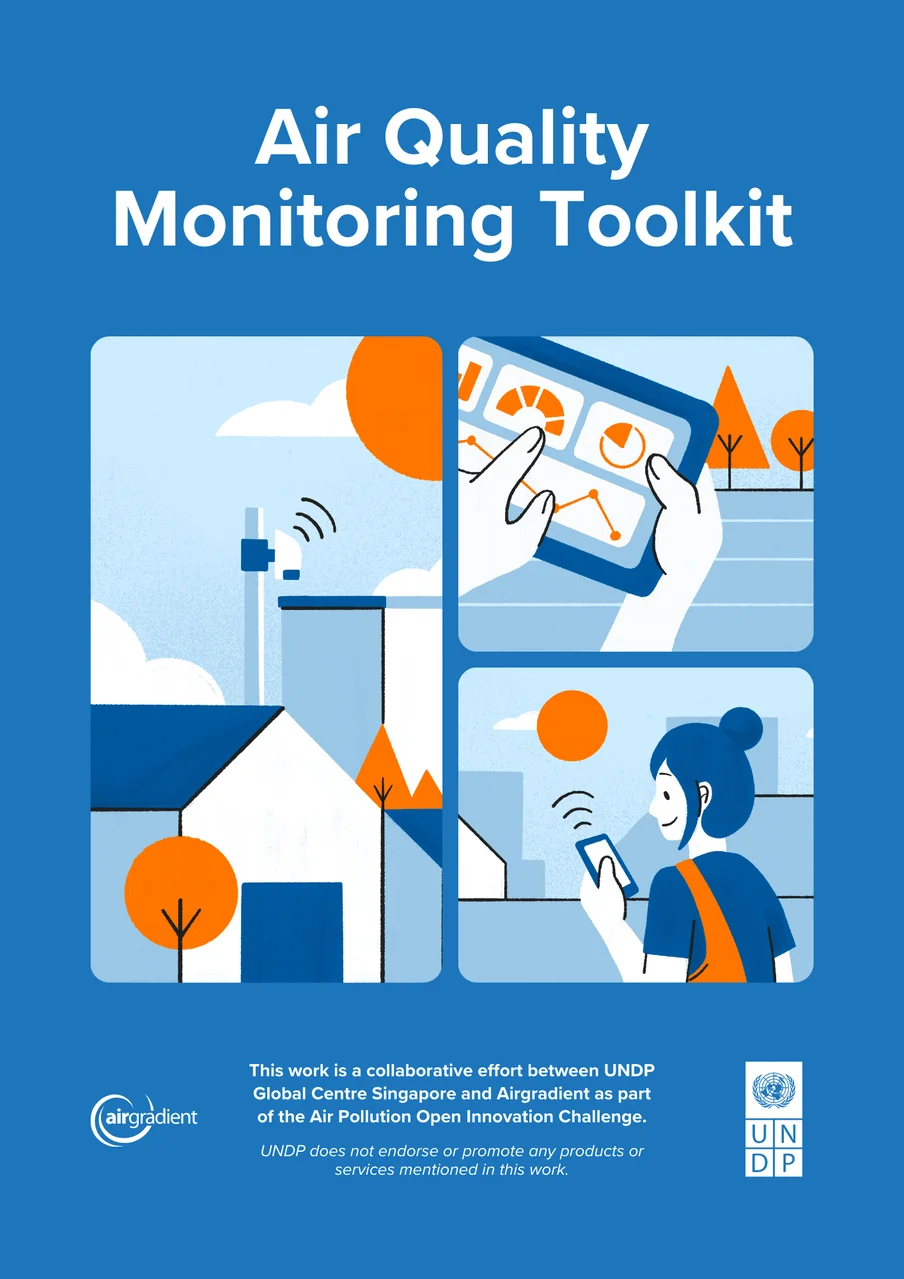
About this toolkit
Originally developed by AirGradient in collaboration with the UNDP Global Centre in Singapore, this toolkit helps communities plan, set up, and operate affordable local air quality monitoring networks.
AirGradient has since transferred the toolkit to the Open Air Foundation, giving this resource an independent, nonprofit home and supporting the Foundation’s mission to make air quality knowledge and tools more widely accessible.
You don’t need an engineering background to get started. Step-by-step guides, illustrated manuals, and video tutorials cover three phases: Planning, Set Up, and Operations. They guide you through choosing monitoring locations, installing sensors, checking data quality, and using the results to support local action.
The toolkit was originally developed through the UNDP Open Innovation Platform Challenge.
Access the Toolkit

Section 1: Planning
This stage focuses on defining the air quality monitoring strategy by identifying key air pollution challenges, selecting monitoring locations, and establishing clear objectives. It ensures that resources are used efficiently and that community engagement is maximized for impactful data collection.
Planning
Section 2: Set Up
This phase provides step-by-step guidance on installing, configuring, and calibrating the air quality monitors, making it accessible even for users with no technical background. With illustrated manuals and video tutorials, it simplifies the process of deploying a functional and reliable monitoring network.
Set Up
Section 3: Operations
This section covers ongoing maintenance, calibration, and data analysis to ensure accuracy and usability of collected air quality data. It also tools for visualization, data sharing, and capacity building, empowering users to translate insights into meaningful actions for cleaner air.
OperationsWhat Is It?
The Low-Cost Hyperlocal Air Quality Monitoring Toolkit was developed to make air quality data more accessible, empowering communities to setup a high quality, yet affordable air quality monitoring network.
Who Is It For?

Governments
Government officials and policymakers can use air quality data to support infrastructure improvements and pollution control measures.

Municipalities
Municipalities can use the toolkit to establish affordable monitoring networks for data-driven public health policies and environmental regulations.

Advocacy groups/NGOs
These groups can use air quality data to fuel awareness campaigns and mobilize community initiatives.

Private Companies
Businesses can use air quality data to improve workplace environments, ensure regulatory compliance, and support corporate social responsibility initiatives.
Introduction to the Toolkit
Watch this video to learn about the Air Quality Monitoring Toolkit and how it can help your community
Key Features

Capacity Building
No experience needed on air quality monitoring! Let the toolkit guide you from page one.

Affordability
Unlike traditional air quality monitoring, the toolkit is a cost-effective solution aimed for scale.

High Data Quality
Achieve accurate and reliable measurements without needing technical expertise.

Data Ownership
Learn how to access, export, and share your monitoring data to support your community’s goals.
What’s Inside the Toolkit?
The toolkit provides a complete and self-contained solution for establishing a hyperlocal air quality monitoring network.
Air Quality Monitors
The hardware guides use AirGradient monitors. Many planning and community engagement chapters also apply to other monitoring systems, with a dedicated chapter explaining how to adapt the toolkit.
Documentation and Guides
More than 20 chapters in 3 sections covers all aspects that need to be known to setup a robust air quality monitoring network.
Videos
Videos are highlighting important aspects of setting up the monitoring network, e.g. how to deploy the monitors.
Dashboard & Analytics
Guides explain how to use the AirGradient dashboard, analytics, and calibration tools to manage a monitoring network and interpret its data.
The Toolkit’s Origins and New Home
AirGradient began as a volunteer project helping a school in Northern Thailand monitor classroom air quality during the burning season. Its experience developing open-source monitors and supporting community monitoring projects helped shape this toolkit.
Developed by AirGradient in collaboration with the UNDP Global Centre in Singapore, the toolkit brings practical guidance on monitoring technology, data quality, and community engagement together in one resource.
The toolkit has now been transferred to the Open Air Foundation. This move gives the knowledge an independent, nonprofit home, where it can support communities, educators, and public institutions working toward cleaner air.