Tools & Resources
Knowledge to put into practice.
Practical guides, open tools, maps, and data for community air quality monitoring and public-interest work.
Start here · English and Vietnamese
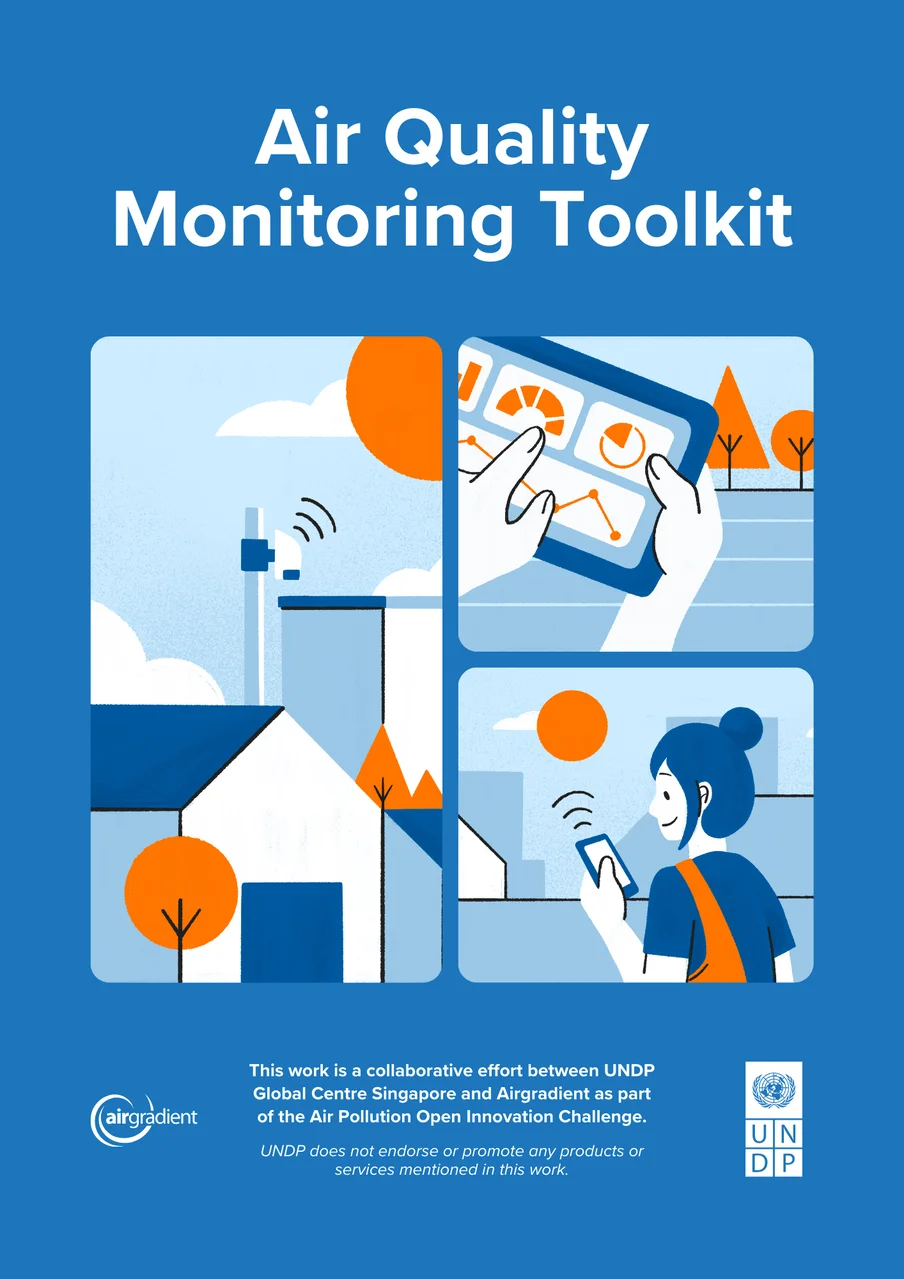
One guide for the life of your project.
The Air Quality Monitoring Toolkit takes you from a useful local question through planning, installation, and everyday operation. Use it to prepare a new project or solve a practical problem in an existing network.
Go to the toolkit
What are you working on?
Find the next step for your monitoring project.

Plan a monitoring project
Define a useful local question, choose locations, and plan a sustainable monitoring network.
Set up and maintain your network
Follow illustrated guidance for installation, calibration, data sharing, and everyday operation.
Access and use data
Learn how to use the AirGradient API and share monitoring data responsibly.
Interpret and work with measurements
Find practical support for operating monitors, managing data, and using your dashboard.
Maps, data, and code
Explore the tools. Build on the work.
Use public measurements with their local context, or explore the open-source foundations behind the tools.

Public outdoor air quality map
Explore public AirGradient monitor data and local air quality conditions across the global network.
Indoor Air Quality Map
Explore contributed indoor air quality measurements. Use the map alongside information about the setting and how measurements were collected.

Open hardware, firmware and code
Find open-source work and repositories maintained by the foundation and the AirGradient community.
What comes next
Help shape the next resources.
New guidance builds on the experience of the people who use it. Share a gap, suggest an improvement, or contribute your expertise.
One Air Toolkit · In development
An extension connecting indoor and outdoor air quality knowledge with practical use in schools, households, and public institutions.
About the One Air ToolkitOpen Air Academy · In development
A planned free, self-paced learning programme on monitoring, calibration, data interpretation, and open tools.
Explore our learning workImprove the existing resources
Tell us where guidance is unclear, share local implementation experience, or discuss documentation, translation, and code contributions.